Why You Should Never Top a Tree
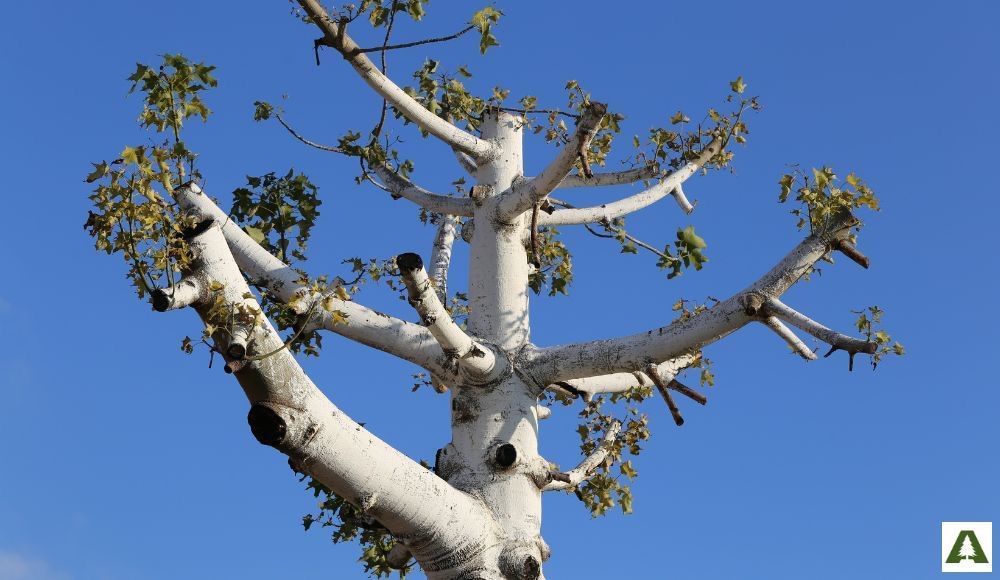
Most professional tree pruning and trimming services regard tree topping as the most damaging pruning practice in arboriculture. Despite decades of research and education outlining its risks, topping is still commonly used—often with good intentions but poor outcomes.
What Is Tree Topping?
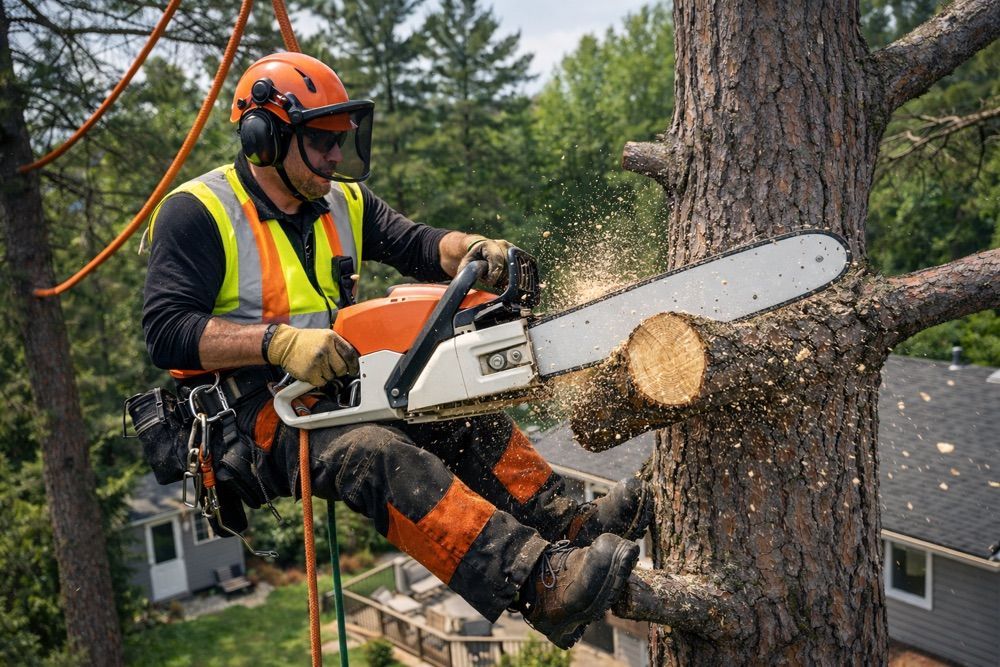
Topping involves cutting major branches back to stubs or to small lateral branches that are too weak to take over as the central growing point. It’s also known as heading, tipping, hat-racking, or rounding over. Homeowners often request topping to
reduce a tree’s height, believing it will make the tree safer. In reality, topping is ineffective for long-term size control and usually increases risk rather than reducing it.
Topping Severely Stresses Trees
Leaves help a tree survive by producing the energy it needs. Topping often removes 50 to 100 percent of a tree’s canopy, which can starve it. The tree responds by activating dormant buds and producing fast-growing shoots below the cuts to replace lost foliage. This emergency growth drains the tree's stored energy reserves. Trees that don't have sufficient reserves often decline or die, while weakened trees become more vulnerable to insects and diseases. Large, open wounds from topping are next to impossible for stressed trees to defend.
Increased Risk of Sun Damage
When a tree’s canopy is suddenly removed, all the previously shaded branches and trunk tissues are exposed to intense sunlight and heat. This exposure can cause sunburn beneath the bark, leading to bark splitting, cankers, and branch dieback—damage that can permanently compromise the tree’s health.
Higher Failure Risk, Not Lower
The new shoots that form after topping grow rapidly—sometimes several feet in a single season—but they are poorly attached. Unlike natural branches that grow from strong, layered wood connections, these shoots are anchored only in the outer wood of the cut limb. As they grow larger, they are far more likely to break during storms, wind, or ice events. Ironically, a tree topped to “reduce danger” often becomes more hazardous over time.
Aesthetic and Structural Damage
Topping ruins a tree’s natural shape, leaving behind unsightly stubs and a mutilated appearance—especially noticeable when the tree is leafless. Once topped, a tree can never fully regain its original form.
Decay and Long-Term Costs
Improper cuts made during topping create wounds that the tree cannot effectively seal. These wounds allow decay to spread through branches and into the trunk. Over time, this leads to increased maintenance costs, reduced property value, and greater liability. Since topping is considered an unacceptable practice, failures caused by topped trees may even be viewed as negligence.
Better Alternatives
When size reduction is necessary, use appropriate crown-reduction techniques. Branches should be pruned back to suitable lateral branches—at least one-third the diameter of the removed limb—to maintain structure and health. In some cases, removing and replacing a tree with a more appropriate species is the safest long-term solution.
In short, topping harms trees, increases risk, and costs more over time. Proper pruning—or thoughtful replacement—is always the better choice.
Contact the Experts
Tree pruning or trimming can be complicated and is best left to the experts. You may encounter issues due to improper technique or a lack of understanding causing damage. Avoid this by working with a company that is experienced in tree pruning and removal, such as Arbor Max Tree Service. Our team of experts has years of experience in this area and can prune or trim your trees effectively.
If you’d like to find out more, please do not hesitate to get in touch today. We’d be happy to answer any questions you might have about our services!